#QueerHeroes Day 16 – Bayard Rustin

#QueerHeroes Day 16.
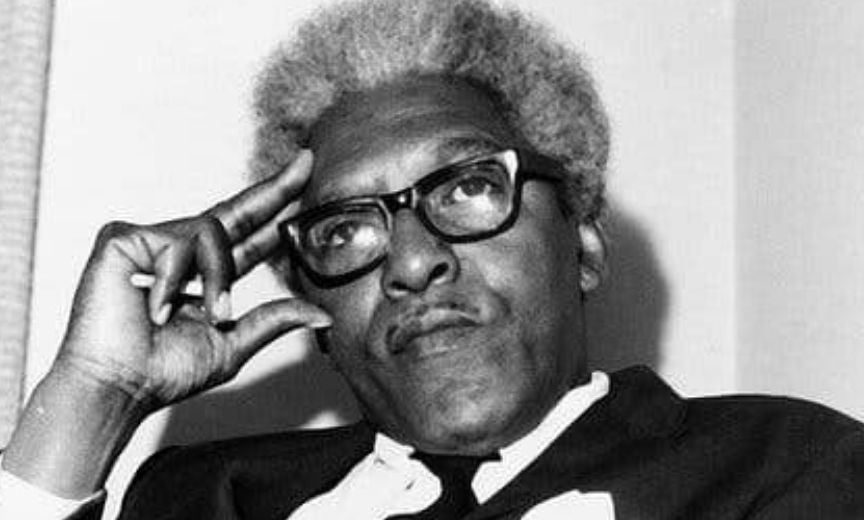
Bayard Rustin

Rustin was born in 1912. His mother was a Quaker. He moved to Harlem in 1937 and his civil rights work quickly began garnering attention, including his work to free the wrongly accused Scottsboro Boys.

He began orchestrating some of America’s earliest freedom rides down South in the 1940s. That decade, he also went to India to learn methods/philosophies of nonviolent resistance.

In the 50s, he was arrested for “sex perversion” and served two months in jail. His homosexuality became public and immediately halted a path that was going to make him one of the foremost faces of the civil rights movement.

He was fired from the Fellowship of Recreation. But his involvement in the movement was never self-serving, it was always centered around liberation. Even though he couldn’t be the face of the movement, his work behind the scenes for it would still make him a vital organizer and activist—most primarily to Dr. Martin Luther King Jr.

His sexuality ostracized him from many other civil rights leaders, nevertheless he went on to organize the historic Jobs March on Washington.

Rustin died in 1987.

#QueerHeroes Day 15 – Aimee Stephens.

#QueerHeroes Day 15.
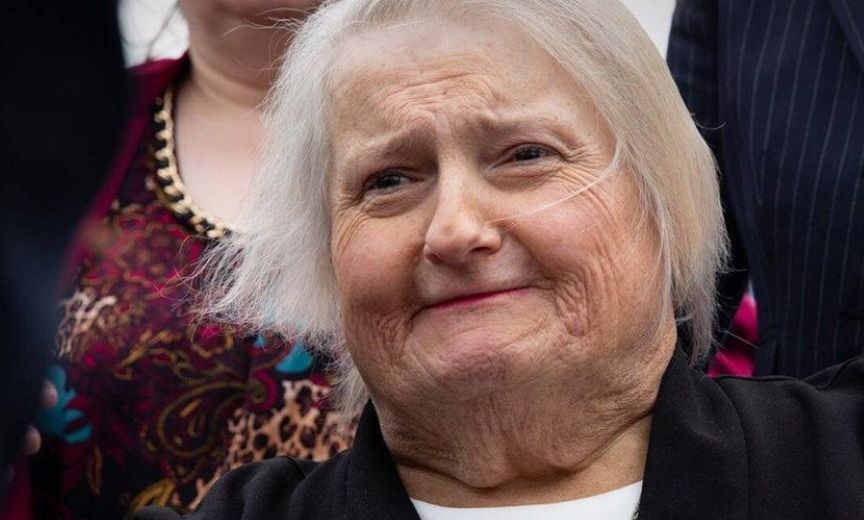
Aimee Stephens.

Today is a historic day, and that’s largely because of Aimee Stephens.

Stephens had worked for six years at a R.G. & G.R. Harris Funeral Homes in Michigan when she wrote a letter in 2013 to her fellow employees announcing her intent to transition and present full-time as a woman.

She was soon fired and told by her boss that “coming to work dressed as a woman was not going to be acceptable.”

This was legal in 26 states—including Michigan.

Stephens sued, with her lawyers arguing that employment discrimination against someone for their gender identity is discrimination on the basis of sex and therefore a violation of the civil rights act.

The case went all the way to the Supreme Court, and today, in a highly unexpected decision, the Supreme Court ruled that Title VII must be interpreted to include sexual orientation and gender identity. It is no longer legal to fire someone because of their gender or sexuality.

Sadly, Aimee wasn’t here to see that historic day or savor this victory. She passed away last month.

If you dehumanize a group of people for long enough, their existence to those who buy into that rhetoric becomes inciting. Employment discrimination against trans people is rampant because society has treated their very existence as a political stance that absolves any obligation to treat them with respect.

In the last years of her life, Aimee continued the great work of tearing that down.

#QueerHeroes Day 14 – Sir Lady Java

#QueerHeroes Day 14.
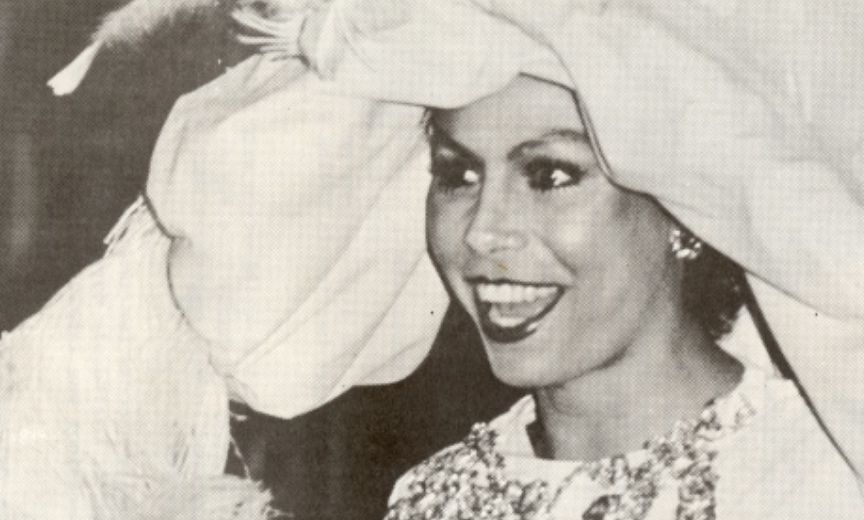
Sir Lady Java

She grew up in New Orleans where she transitioned at an early age. Soon after moving to Los Angeles in the 1960s, she was an icon of the local nightlife scene, keeping such company as Richard Pryor, Don Rickles, and Sammy Davis Jr.

Due to an ordinance forbidding female impersonation, the LAPD began shutting down Sir Lady Java’s performances and threatening to fine bars who booked her.

When Redd Foxx’s club canceled her performances, she began picketing them and worked with the ACLU to get it overturned. The courts would ultimately reject her case, but we know now that she was on the right side of history.

In the 70s, she performed for her idol, the incomparable Lena Horne. After the performance, Horne ran up to the stage and kissed her on the mouth.

After decades of retirement and after suffering a stroke, Sir Lady Java has made a gradual return to the spotlight. In 2016, she was the grand marshal of LA’s trans pride festival.

#QueerHeroes Day 13 – Frank Ocean

#QueerHeroes Day 13.
Frank Ocean

Have you ever been at a crowded party or bar and fallen into an intimate conversation with a total stranger? You have a dull awareness of what’s happening around you, you hear the voices of surrounding people, perhaps some background music, but this unexpected, kinetic connection with this stranger feels singular.

That’s how I feel when I listen to Frank Ocean. His lyrics are poetic but conversational. His sound is symphonic, abandoning conventional formulae and opting instead for an emotional landscape and sonic transcendence.

He came out as bisexual in a blog post ahead of the release of his album Channel Orange. After the Pulse massacre, he wrote of the ways hatred and fear are passed through generations.

“It’s hell on Earth and the city’s on fire
Inhale, in hell there’s heaven
There’s a bull and a matador dueling in the sky
Inhale, in hell there’s heaven…”

Most art is relatable, and that’s good, but Frank Ocean’s work goes beyond that, into intimate human connection with someone you’ll never meet. The gentle stranger at the crowded bar.

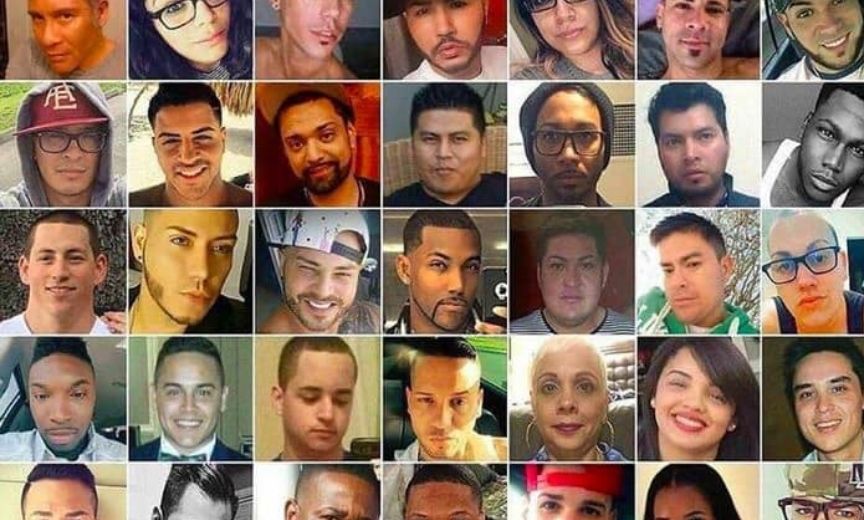
#QueerHeroes Day 12 – The Pulse Shooting Victims

#QueerHeroes Day 12

Stanley Almodovar III

Amanda L. Alvear

Oscar A. Aracena Montero

Rodolfo Ayala Ayala

Antonio Davon Brown

Darryl Roman Burt II

Angel Candelario-Padro

Juan Chavez Martinez

Luis Daniel Conde

Cory James Connell

Tevin Eugene Crosby

Deonka Deidra Drayton

Simón Adrian Carrillo Fernández

Leroy Valentin Fernandez

Mercedez Marisol Flores

Peter Ommy Gonzalez Cruz

Juan Ramon Guerrero

Paul Terrell Henry

Frank Hernandez

Miguel Angel Honorato

Javier Jorge Reyes

Jason Benjamin Josaphat

Eddie Jamoldroy Justice

Anthony Luis Laureano Disla

Christopher Andrew Leinonen

Alejandro Barrios Martinez

Brenda Marquez McCool

Gilberto R. Silva Menendez

Kimberly Jean Morris

Akyra Monet Murray

Luis Omar Ocasio Capo

Geraldo A. Ortiz Jimenez

Eric Ivan Ortiz-Rivera

Joel Rayon Paniagua

Jean Carlos Mendez Perez

Enrique L. Rios, Jr.

Jean Carlos Nieves Rodríguez

Xavier Emmanuel Serrano-Rosado

Christopher Joseph Sanfeliz

Yilmary Rodríguez Solivan

Edward Sotomayor Jr.

Shane Evan Tomlinson

Martin Benitez Torres

Jonathan A. Camuy Vega

Juan Pablo Rivera Velázquez

Luis Sergio Vielma

Franky Jimmy DeJesus Velázquez

Luis Daniel Wilson

Jerald Arthur Wright

Every queer person in America remembers the feeling we had four years ago tonight. The Pulse Massacre was a searing reminder that being queer in public is, and always has been, an act of rebellion. No matter how comfortable some of us get, until we are on an equal societal footing (which necessitates dismantling systems of not just queer oppression, but ALL oppression, for queer people exist within every oppressed group), our public existence will always be dissent. Horrifically and tragically, these heroes were reminded of that three years ago today.

I heard the news in the middle of a shift at work and found myself fighting tears the whole night. I went home and finally sobbed with my roommate. For white, cis gays like me, queer oppression often feels like an asterisk; a footnote in a long book—I know it’s there, but in most instances, I can ignore it if I choose because my life isn’t directly threatened and my existence is always validated. I have the luxury of treating it as forgettable because it’s, honestly, often undetectable. Most of the queer community doesn’t have that luxury.

These heroes died celebrating our collective, rebellious, radical joy. Not all were queer, but when my imagination gets the better of me and I visualize those horrific final moments, I can’t bring myself to make it matter, especially not enough to dive into who was and who wasn’t.

From The Upstairs Lounge to Pulse and all before, between, and after, I know in my heart that our collective life force will extinguish the hideous death that constantly shows its face. But only if we (especially those in the community) stop ignoring it.