
#QueerHeroes Day 11 – Larry Kramer

#QueerHeroes Day 11.
Larry Kramer.

Larry Kramer is the most cantankerous freaking genius gay activist there ever was. He doesn’t mince words, but he fought for our right to mince and I adore him. He was around during Stonewall to AIDS to right this fucking minute and I consider him to be one of the foremost keyholders to this entire movement because his life embodies it. It’s daunting right now to even begin to try to summarize what he’s done for our rights. I’m gonna focus on his work with ACT UP for simplicity’s sake.

He was instrumental in founding the organization, first of all. Then he was the voice of reason during the schism that would plague it. He wrote immortal works like those in The Normal Heart, Faggots, and more. He was arrested numerous times fighting for our rights.

If you couldn’t tell, I adore this man and this pathetic, makeshift “bio” is far too broad and I’m far too simple to ever convey the importance of his work and life. So, instead of a picture, I’m posting a video that I feel embodies him. It was the moment he took charge at the height of the AIDS crisis during an ACT UP meeting that, til he spoke up, had devolved into bickering and animosity.

Larry Kramer is a pioneer and it will be a sad, dark day when we inevitably lose him. I hate that the only clip i could find is censored, but please watch this video. It will mobilize you and it embodies all the work he’s done for us.

#QueerHeroes Day 10 – Candy Darling

#QueerHeroes Day 10.
Candy Darling.

Candy was born in 1944. After learning “the mysteries of sex from a local salesman in a children’s shoe store,” she began presenting as feminine and frequenting a queer bar called The Hayloft. When her mother confronted her about the rumors, Candy went in the next room then returned to face her mother in a dress. Her mother said, “I knew then that I couldn’t stop my [Candy]. Candy was just too beautiful and talented.”

In 1967, she starred in an off-broadway play written by Jackie Curtis and co-starring a young Robert DeNiro. Warhol attended a performance. The two were introduced by friends that night at a club called Salvation. By the end of the night, Candy was the latest of Warhol’s muses. She would go on to star in a number of his films. But she wasn’t just limited to Warhol. She played Karen in the 1971 film “Some of My Best Friends Are” (also starring Rue McClanahan aka Blanche Deveraux from “The Golden Girls”). The movie is, I think, sentimental and kind of a bore, but it was edgy for its time because it took place in a Greenwich Village gay bar on Christmas Eve.

Candy was just as entrancing when she wasn’t playing a character. In addition to being Warhol’s muse, she also inspired a lyric in Lou Reed’s “Walk on the Wild Side”:

“Candy came from out on the island,
In the backroom she was everybody’s darling,
But she never lost her head
Even when she was giving head
She says, hey baby, take a walk on the wild side
Said, hey babe, take a walk on the wild side.”

Darling died in 1974 of Lymphoma at age 29. She’s been portrayed in films, television, and onstage. She even has a magazine, C☆NDY, known as “the first transversal style magazine,” named after her.

#QueerHeroes Day 9 – E.M. Forster

#QueerHeroes Day 9.
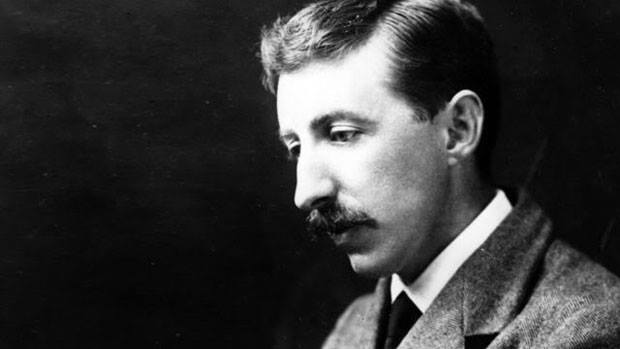
E.M. Forster

Forster was an English novelist most known for writing A Room With a View, Passage to India, and Howard’s End. However, at the second half of his life he never published another novel; only occasional short stories and essays. This sudden drop in output mystified historians until a collection of papers discovered after his death revealed that he’d spent his youth suppressing his same-sex attraction until losing his virginity at 38 to a wounded soldier in 1917 and finally began pursuing relationships and affairs after that. He didn’t have the same capacity to write novels at the same rate and couldn’t access the voices of upper class straight characters of the era anymore. “I should have been a more famous writer if I had written, or rather published more, but sex prevented the latter,” he wrote in his private diary.

The last novel he ever wrote wouldn’t be published until after his death.

Forster finished Maurice in 1913 and showed it to a few friends but didn’t dare publish it during his lifetime. It told the story of two male university students who realize their feelings for each other and carry on a decades long romance. Neither of the men become invalids or commit suicide or face social ostracism. They’re fully faceted. What’s more, it’s damn well-written. I admittedly haven’t read any of his other works, but. devoured “Maurice” and recommend it to everyone.

Forster died in 1970. Maurice was published in 1971.


#QueerHeroes Day 8 – Sylvester

#QueerHeroes Day 8
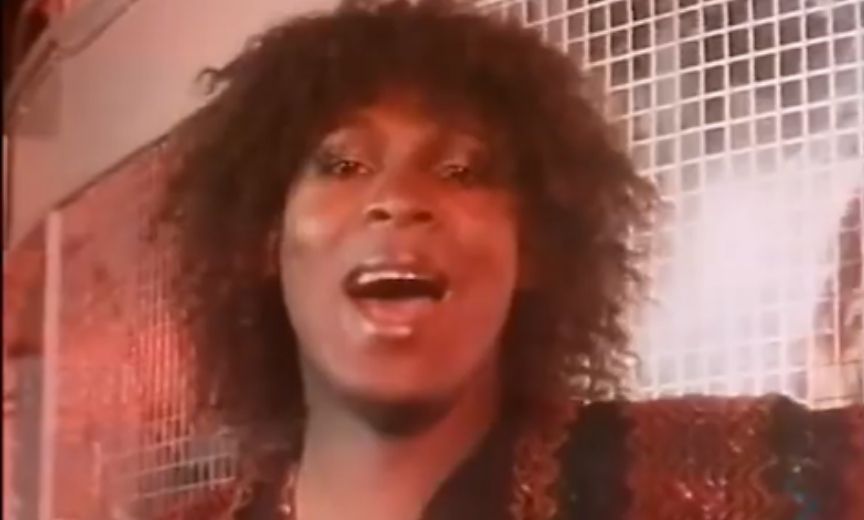
Sylvester.

As a child, he stopped singing at church (because of the congregation’s disapproval) to pursue secular music. His grandmother was a blues singer in the 30s and supported the expression of his sexuality and his artistry wholeheartedly.

After moving to San Francisco in 1970 in a queer cabaret called The Cockettes, often doing a Billie Holiday drag tribute. He soon found two backing singers in Izora Rhodes and Martha Wash aka Two Tons O’ Fun (And later, as The Weather Girls, the two would take the world by storm with “It’s Raining Men.”). By the end of the decade, he was known as the “Queen of Disco.” Then-Mayor Dianne Feinstein declared March 11 “Sylvester Day,” giving him keys to the city to boot. This was the same year of his anthem “You Make Me Feel (Mighty Real).”

He’d later go on to be screwed over financially by his record label. As the disco era began to fade, he’d be forced to tone down the campiness that made him such an asset to producers in the previous decade. But if you’re ever in a queer bar when Mighty Real comes on, look at the faces around you lighting up and even the biggest prudes beginning to dance. He’s gonna live forever.


“The Gay Metropolis” by Charles Kaiser


I’m currently halfway through this work and it’s absolutely thrilling. In documenting the evolution of gay life and gay rights in America, Kaiser defines decades through anecdotes, rather than presenting a sterile or long-winded regurgitation of events. This format not only helps the reader retain defining characteristics of each decade from the 1940’s to the 1990’s, but it endows each story with a sense of intimacy—almost like someone’s telling you the story at a bar—that makes for truly compelling nonfiction.