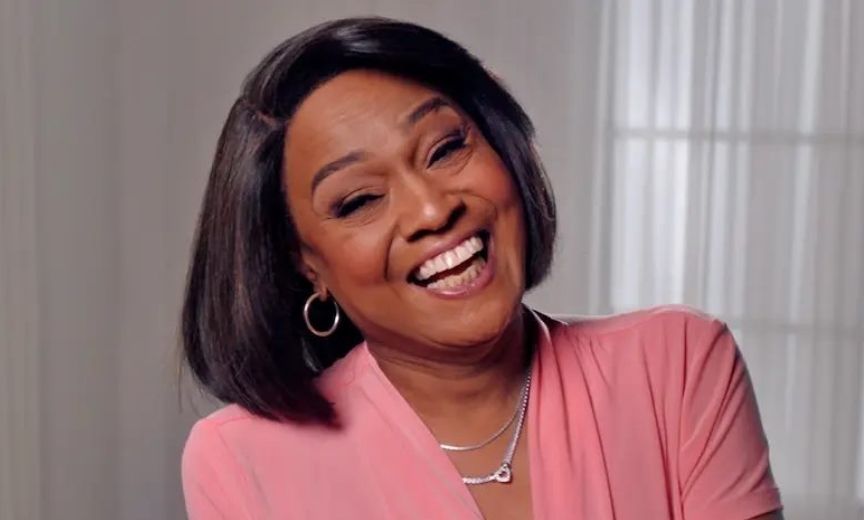
#QueerHeroes Day 26 – Sandra Caldwell.

#QueerHeroes Day 26.
Sandra Caldwell.

In the early days of her transition, Sandra walked the balls in the legendary House of LaBeija.

But her passion was acting, and she would suppress her very identity to achieve it.

For decades, Sandra “lived stealth”—a term used by trans people for those who pass as cisgender and conceal the sex they were assigned at birth in order to escape violence, unemployment, and other persecution.

Fearing a loss of work, she kept her assigned sex a secret as her acting career flourished with performances at the Moulin Rouge in Paris and roles in “Little Men,” “The Cheetah Girls,” “Serendipity,” “The Book of Negroes,” and dozens more.

But she lived every day with the threat that she would be exposed and called a fraud. They call it “living stealth” for a reason.

“Do you know what it’s like to go on a set and be afraid?” she asked. “Your head is trying desperately to stay in the scene. You wake up afraid. You go to sleep afraid. You’re trying to figure out if somebody’s going to drop the bomb that day, the next day. When is it going to happen?”

Then, Caldwell auditioned for a play in New York called Charm, about a trans woman who starts a charm school for trans and gender nonconforming youth (the character was inspired by Gloria Allen of #QueerHeroes Day 20). They wanted a trans woman to star.

For a chance to play the part, she would have to give up a role she’d played her entire career. It was her first audition as an openly trans woman. She booked it.

Crediting trans pioneers like Laverne Cox and Janet Mock, Caldwell came out publicly in a New York Times article (posting in comments). Critics lauded her performance in Charm and she continues to act today. It only takes hearing her voice and seeing the spark in her eyes to know why.

You can learn more about her story—and about trans representation in tv and film—through the incredible new Netflix documentary “Disclosure.” It’s one of the most compelling documentaries I’ve seen.

Her New York Times profile concluded with her thoughts on what would happen after coming out:

“I don’t know what it’s going to be like, but I kind of want to live the rest of what I’ve got on this planet as if there’s such a thing as complete freedom. I want to live in that.”
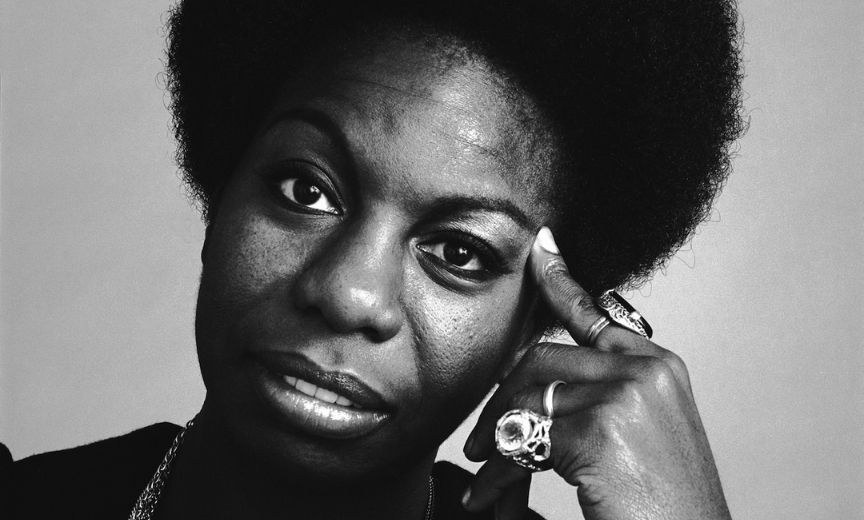
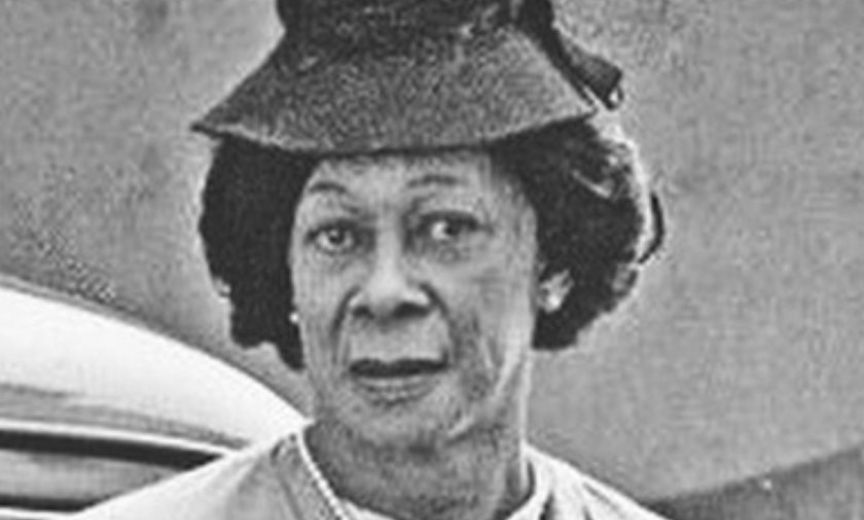
#QueerHeroes Day 25 – Nina Simone.

#QueerHeroes Day 25.
Nina Simone.

It’s extremely daunting to try and distill the magnificence that is Nina Simone into just a few paragraphs.

For decades, her voice has been the fuel for strides towards liberation and justice. Her work is an example of the necessity of art in revolution.

Born Eunice Waymon, Nina was trained as a classical pianist and could play anything by ear. Though she was an accomplished songwriter, she also had a knack for invigorating well known standards, enlivening them to fit the turbulent times she witnessed.

If there’s a soundtrack to a revolution in America that doesn’t include her voice, it’s incomplete. Inspired by her dear friend, fellow activist, and iconic playwright Lorraine Hansberry, Nina wrote “To Be Young Gifted and Black,” which includes the lyrics:

“Young, gifted and black
We must begin to tell our young
There’s a world waiting for you
This is a quest that’s just begun.”

If you have any doubt of her ability to sonically transport you to a moment in history, listen to “Why? The King of Love Is Dead,” her commemoration written after the assassination of Dr. Martin Luther King.

“Will the murders never cease
Are thy men or are they beasts?
What do they ever hope, ever hope to gain?
Will my country fall, stand or fall?
Is it too late for us all?
And did Martin Luther King just die in vain?”

What’s gonna happen now? In all of our cities?
My people are rising; they’re living in lies
Even if they have to die
Even if they have to die at the moment they know what life is
Even at that one moment that ya know what life is
If you have to die, it’s all right
Cause you know what life is
You know what freedom is for one moment of your life
What’s gonna happen now that the King is dead?”

Nina Simone died in body in 2003, but you’ve seen her spirit in the streets these past weeks and in the conviction of the millions her immortal voice inspires.

#QueerHeroes Day 24 – Lucy Hicks Anderson

#QueerHeroes Day 24.
Lucy Hicks Anderson.

From the time she was born in 1886, Lucy knew she was a girl. Her parents took her to a physician when she was 10 years old—in 1896—and the doctor said they should just raise her as their daughter. That’s exactly what they did.

At 15 years old, Lucy left home. Her marriage to her first husband, Clarence, lasted nine years, but all the while she was saving up the money she made as a domestic worker and prize-winning chef. After they separated, she bought a boarding house and became a CEO of the Oxnard, California underground.

Out of the house, Lucy owned and operated a booming brothel and speakeasy.

Her status as a socialite and event planner made her indispensable to the Oxnard community. One night, she was arrested after her brothel was raided, but bailed out by none other than the town’s leading banker.

Why? He had scheduled an elaborate dinner party that he knew he couldn’t pull off with Lucy in jail.

It all came crashing down in 1945, when a sailor said he’d come down with an STD from a woman in Lucy’s brothel.

Every woman in the place—including Lucy—had to undergo medical examination, and that is when she was outed as trans and charged with perjury.

She remained dignified throughout her trial, even when the judge said her marriage to her second husband, Reuben Anderson, was invalid and ordered that she begin wearing men’s clothing.

Lucy said, “I defy any doctor in the world to prove that I am not a woman. I have lived, dressed, acted just what I am: a woman.”

She and Reuben remained together in California for the rest of their lives.

The socialite, entrepreneur, and restaurateur died in 1954 at 68 years old.

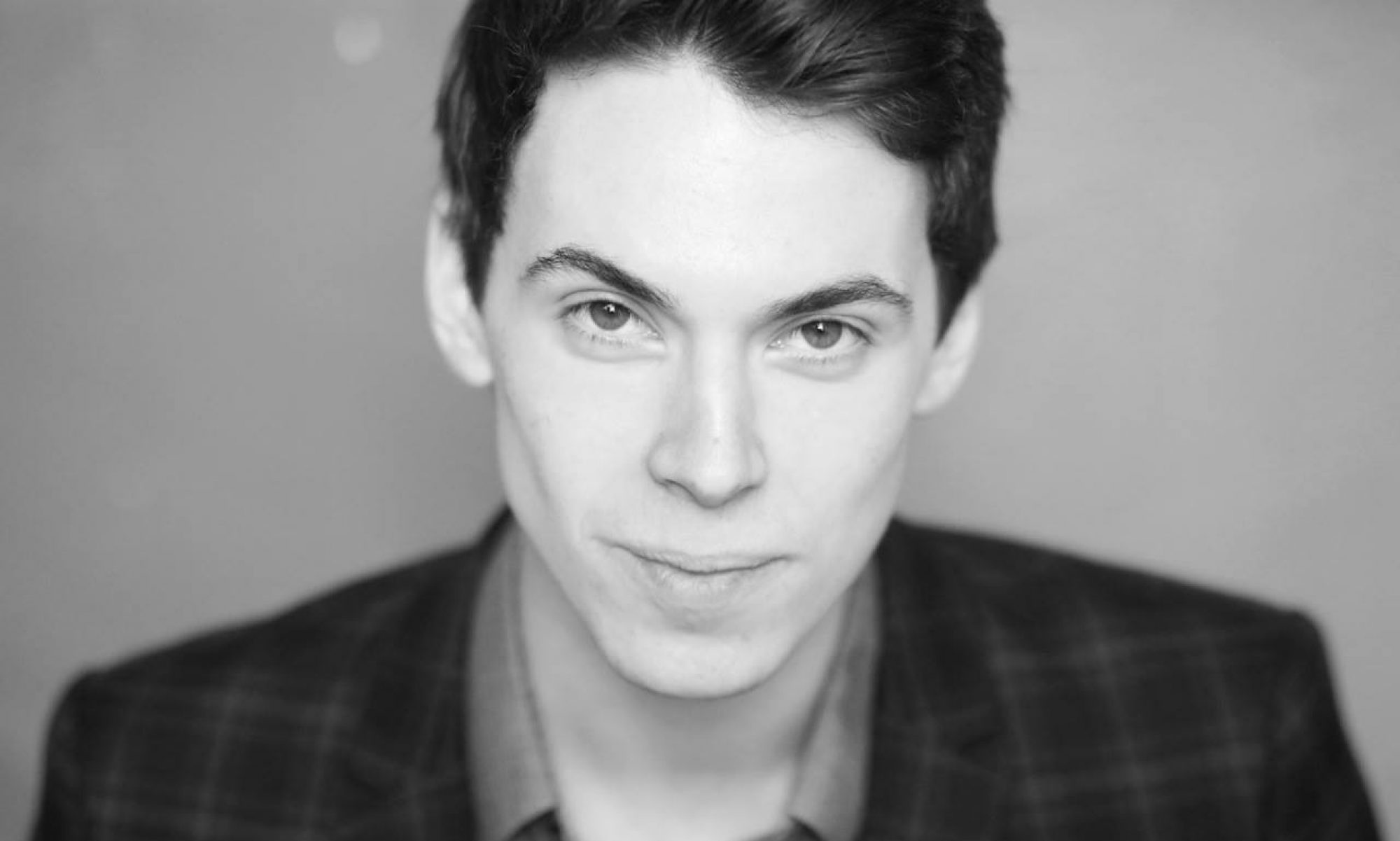
#QueerHeroes Day 23 – Jean-Michel Basquiat

#QueerHeroes Day 23
Jean-Michel Basquiat

Basquiat was born in Brooklyn in the 60s. Poor and often homeless in his youth, he and a friend began collaborating on graffiti murals downtown under the name SAMO.

SAMO became an underground celebrity. Soon, a homeless Basquiat went from selling paintings and tee shirts on the streets to selling paintings for thousands.

From World of Wonder:

“Basquiat’s big break came with a gallery show in 1981. He presented 15 pieces on lumber and foam rubber found in the rubbish. The pieces were filled with childlike drawings of cars and cartoon characters. All of the work sold at the opening. A demand for original Basquiats only grew stronger and they sold as fast as he could paint them, going for $5,000 – $10,000.”

His work teemed with a rage and rebellion that’s cathartic to look at, but he was more than just a painter. He was a poet, a musician, and an overall creative force. A running theme throughout his work is the dichotomy that inequality foists upon society: rich and poor, black and white, etc, as well as offering a visual representation of the torment colonization unleashes onto its victims.

Legends like fellow graffiti artist Keith Haring and Andy Warhol became his lifelong friends. Warhol was particularly inspired by his work, so much that the two did a joint show at Palladium.

Basquiat died of a heroin overdose at 27, but his work lives on forever. This bio isn’t nearly thorough enough to honor his legacy, so I wholeheartedly encourage you to research him further.

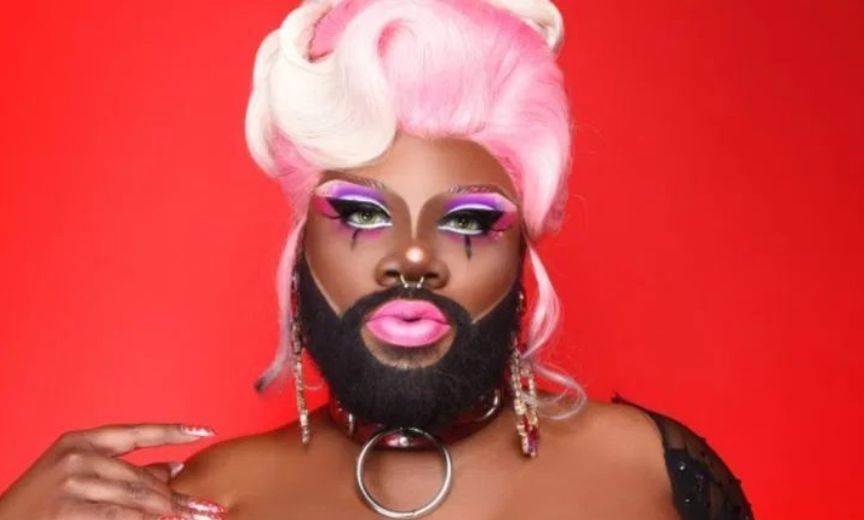
#QueerHeroes Day 22 – Lucy Stoole.

#QueerHeroes Day 22.
Lucy Stoole.

There’s a reckoning happening right now in the Chicago drag scene, and Lucy Stoole is one of its main catalysts.

In response to a racist climate in numerous Chicago queer bars—including instances of Black queens only being booked for “Beyoncé night” at some venues, being humiliated by white emcees in front of audiences, and one particularly harrowing instance when Shea Couleé was told by T Rex that they should do Slave 4 U featuring Shea picking cotton—Lucy and other Black queer activists in Chicago forced change.

They organized the Drag March for Change in response to the murders of Black people by police. They demanded a civilian accountability board and federal hate crime statutes for trans people. Thousands of people turned out.

In response to the racist behavior in the Chicago drag scene, Stoole was crucial in recently forming the Chicago Black Drag Council. Their list of demands in an open letter to T Rex was circulated throughout the community and the council recently held a town hall on Twitch. The council gave Black drag queens a chance to speak directly to White bar owners, managers, and queens about the experience they had.

By the end of the town hall, practically every owner and emcee publicly committed to meeting the council’s list of demands, to hire Black management, to hire Black queens out of more than tokenism, and to hold their patrons accountable for racist behaviors.

T Rex, the drag queen who suggested Shea Coulée—one of the most accomplished drag queens in the world—perform that racist and demeaning number, has now lost her gigs at Roscoe’s and various other establishments.

This all occurred in a matter of weeks and Lucy Stoole’s organizing acumen and use of her influence in the scene was crucial to that.