#QueerHeroes Day 20 – Billie Holiday

#QueerHeroes Day 20.
Billie Holiday.

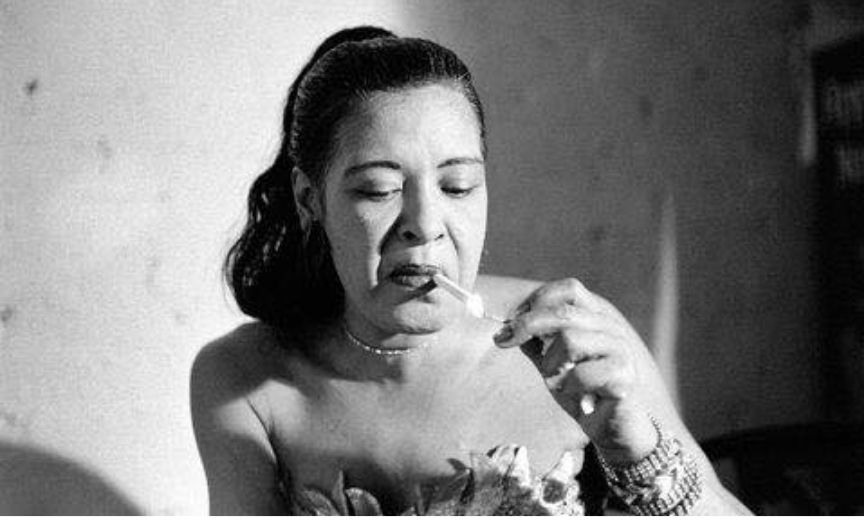
Holiday got her start working in the buffet flats during the Harlem Renaissance. She was born Eleanora Fagan and changed her name to Billie after the silent film star Billie Dove.

She was openly bisexual and her alleged lovers included many stage stars (Tallulah Bankhead is rumored to be among them). She often covered the blues standard “T’aint Nobody’s Biz-ness if I Do”: an anthem of self ownership and determination.

Throughout her life, Lady Day struggled with addiction. A bull shit cabaret law in New York would ban her from performing in the city toward the twilight of her career. But the tangible pain and the nearly contradictory resilience that swirl within her voice have made legions of people feel understood for over a century.

#QueerHeroes Day 19 – James Baldwin

#QueerHeroes Day 19.
James Baldwin.

Baldwin’s first novel Go Tell it on the Mountain was widely praised when it came out in 1953. However, when he went to his publisher with his second novel, Giovanni’s Room he was told to burn it. The book didn’t shy away from bisexuality or homosexuality and was met with controversy in 1956.

Baldwin’s activism was transformative. He moved back to the U.S. from Paris in the late 50’s before traveling to Montgomery, Alabama to interview those living under Jim Crow. By the 60’s, he was giving lectures on civil rights at college campuses all over the country, and the audiences were widely white liberals. Soon, his assessments of race in America and his accounts of being black in America were too rallying to ignore.

His insight would be invaluable to lawmakers. After expressing to Robert Kennedy that the U.S. Government was widely responsible for violence arising in Birmingham, the two met for breakfast at Kennedy’s apartment. A second meeting came later and with other formidable activists: Harry Belafonte, Lorraine Hansberry, Lena Horne, and others. Baldwin would be instrumental in coordinating the March on Jobs and the wave of civil disobedience following the Birmingham church bombing.

His body of work ranges from novels to plays to essays to short stories. Baldwin was a force and—like his comrades Hansberry, Belafonte, and Horne—knew that art and artistry are some of the most useful weapons against evil.

“I think that no one any longer can be fooled about the intentions of the American government because they’ve made it perfectly clear. And that may be the most healthy thing that has happened in this time. Nobody, after all, can say anything for the present administration. It represents the American illusion that it’s a white country, that it’s a white world and that they can make it a white universe — the moon is our first colony.” -James Baldwin in a 1970 interview for Come Out!, the Gay Liberation Front magazine.

#QueerHeroes Day 18 – Peter Staley.

#QueerHeroes Day 18.
Peter Staley.

It’s impossible to tell just how many lives were saved by the work of Peter Staley and the Treatment Action Group. That’s because these lives, subsequently, were never immediately threatened.

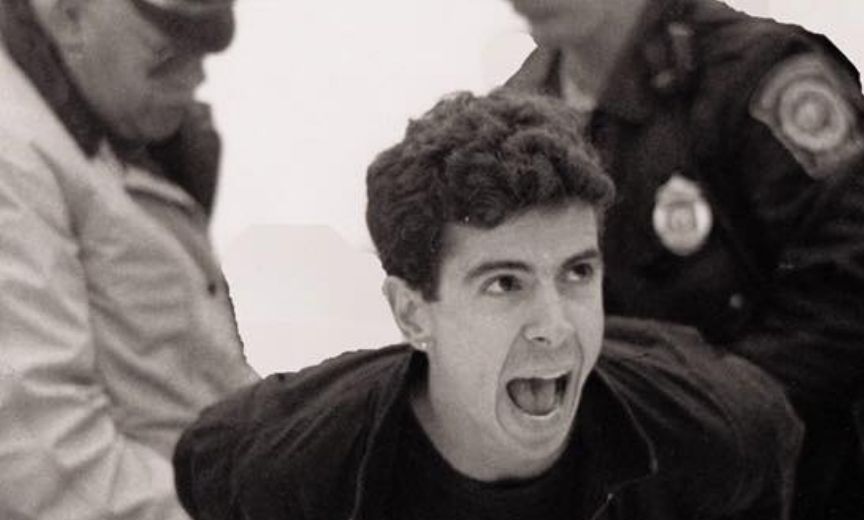
Staley worked on Wall Street out of college–a job whose atmosphere compelled him to stay in the closet. He was diagnosed with AIDS-Related Complex in 1985 and on his way to work in 1987, he was given a flyer promoting ACT UP. Shortly after, he attended his first meeting. Eventually, he was trading bonds by day then heading fundraising for ACT UP by night. A year later he would be blocking traffic on the same street in protest.

Over the years, he would chain himself to a balcony at NYSE right before the opening bell, chain himself to the offices of various research and pharmaceutical companies, orchestrate the draping of a giant nylon condom over the home of homophobe Jesse Helms, and scale a balcony to mount an ACT UP flag atop the headquarters of the National Health Institute.

Staley and others in the Treatment & Development group of ACT UP were mostly self-taught. They literally began boot-legging textbooks and consulting sympathetic specialists until they knew so much that the very pharmaceutical companies they’d protested ended up consulting them for the best way to go about expediting distribution of these life saving drugs. They were instrumental in getting drugs into bodies, figuring out what worked and what didn’t, scouring for a way to save our community when no one in power seemed to care

#QueerHeroes Day 17 – Dick Leitsch

#QueerHeroes Day 17.
Dick Leitsch

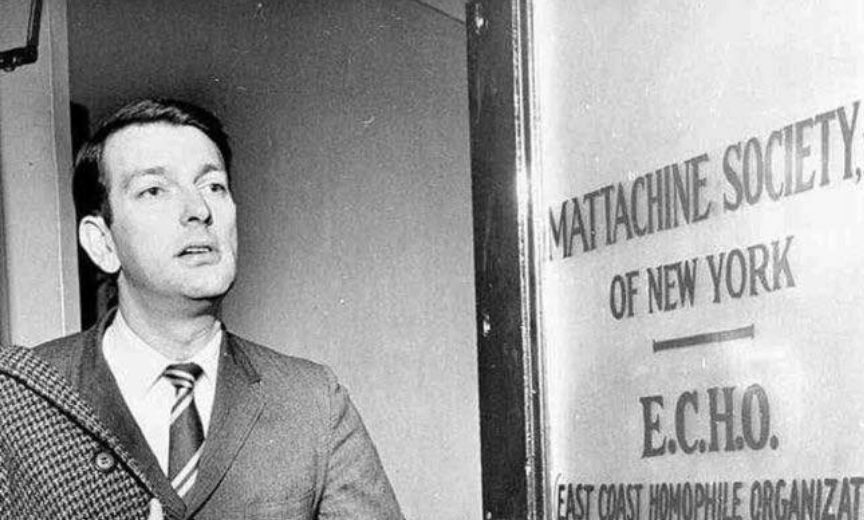
Leitsch was a formidable member of the Mattachine Society and eventual president and executive director for the New York chapter of the organization. He was one of the first and few members to begin using his real name in interviews and voluntarily presenting himself as gay to the press.

In response to the New York law forbidding bartenders to serve alcohol to queer people, Leitsch organized Mattachine’s “Sip-in” in 1966. It almost backfired when the press followed them to two different bars with no results. They went to Julius’ in the Village and Leitsch said to the bartender, “We are homosexuals. We are orderly, we intend to remain orderly, and we are asking for service.” The bartender refused and they sued the bar for one dollar (They weren’t after money, just exposure and a means to challenge the ordinance in court). The court found that gays had the right to peacefully assemble. It wasn’t an indisputable win, but that such an act of gay civil disobedience worked began setting the framework for acts of disobedience to come.

In 1969, Leitsch heard on the radio that an unruly crowd was building outside of a bar in the Village. The bar was Stonewall and Leitsch arrived to the riots and immediately began documenting them. He was the first gay journalist to report on the event, with his account being published in The Advocate and in the Mattachine newsletter.

Also, fun fact, Leitsch gave Bette Midler her first published interview ever in Gay Magazine in 1970.

Julius’, the site of the Sip-in, is still a hugely popular spot today and one of my favorite bars in the city. Multiple pictures of Leitsch hang on the wall. One of them is signed. I first heard of him when researching for my book, and assumed he’d passed away like so many of the figures I’d been reading about, but around the second or third time I went to Julius’, I saw a notecard placed on one of the tables: Reserved for Dick Leitsch.
#QueerHeroes Day 16 – Divine

#QueerHeroes Day 16.
Divine.

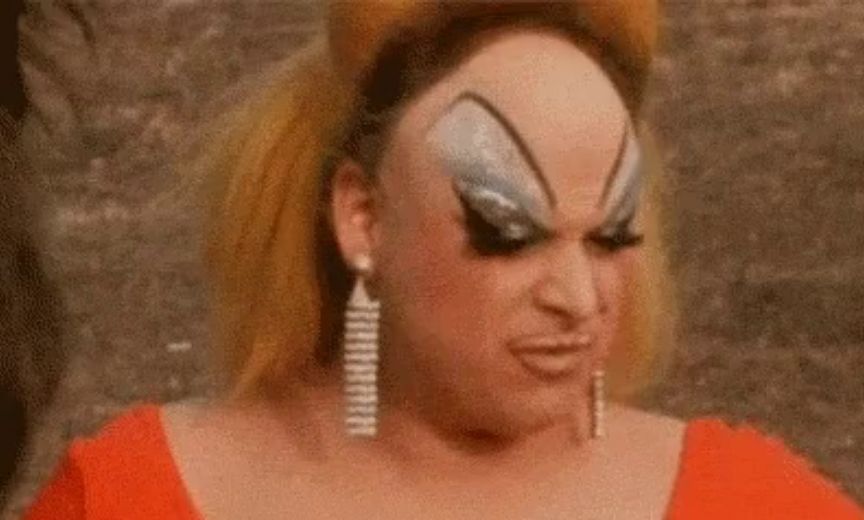
Born Harris Glen Milstead, Divine was a Baltimore native and childhood friends with John Waters. They would make amateur films together as teens and he would give her the moniker “Divine.”

You can’t be a muse of John Waters without being filthy and a tad fucked up. She proved this in at least seven of his early films, including Pink Flamingos (where she literally ate a fresh dog turd). The film would be a cult hit and catapult her and Waters to underground stardom.

As Waters became more sought after, he continued to use Divine in his movies, the final one being “Hairspray.” She would also build her own career as a musician with singles like “You Think You’re a Man.” She also inspired the look of Ursula from Disney’s The Little Mermaid.

Toward the end of her career, she wanted to be a “serious” actor. Performing in the movies as a man. He would only succeed in that with the 1989 film “Out of the Dark,” playing Detective Langella. The film was released posthumously after she died in 1988

But drag and queer culture wouldn’t be the same without her. She was a pioneer in taking drag out of the aim of perceived femininity and instead to a realm of ugliness that was so paradoxically beautiful. Queer in its fearlessness.