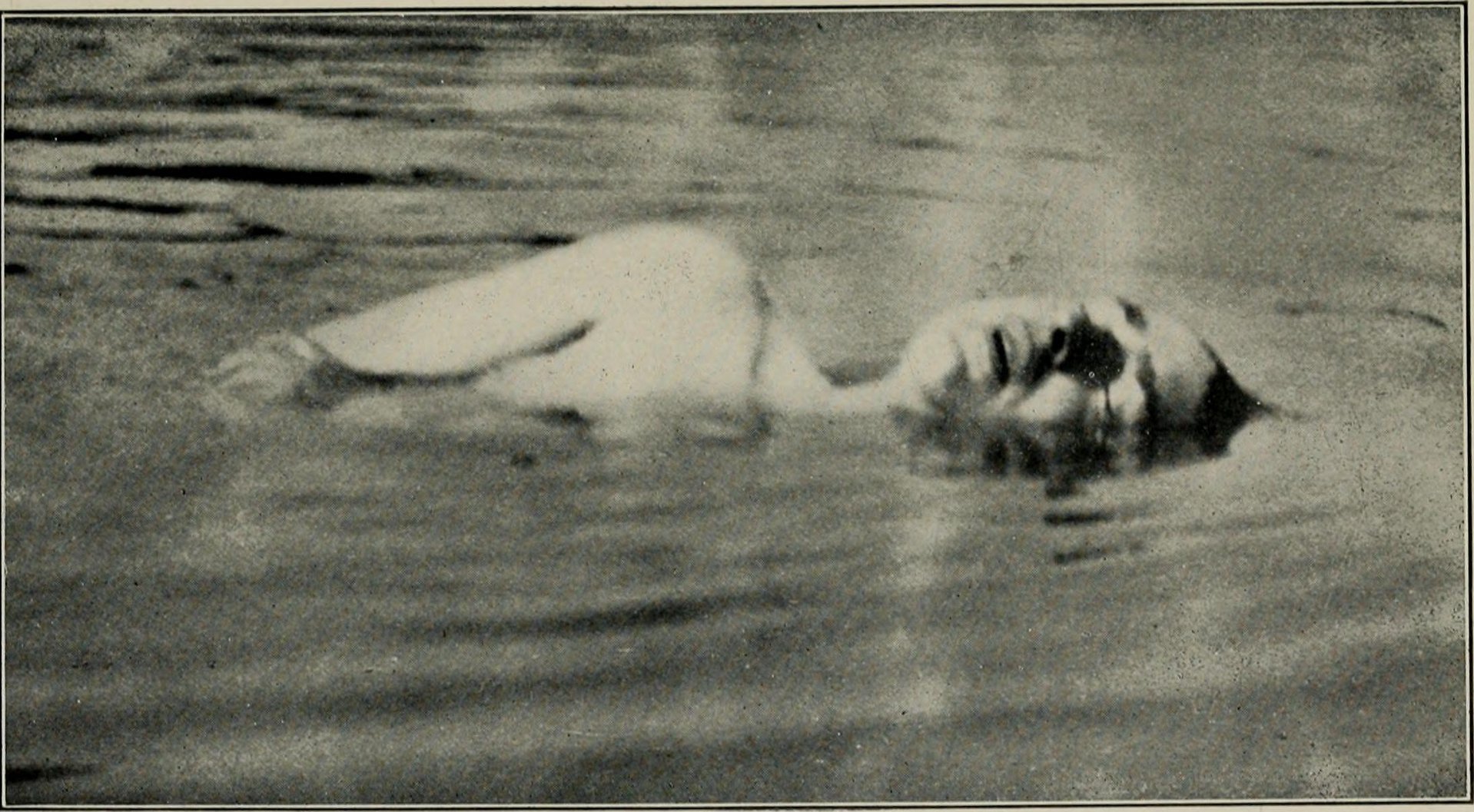
#QueerHeroes Day 7 – Ma Rainey

#QueerHeroes Day 7
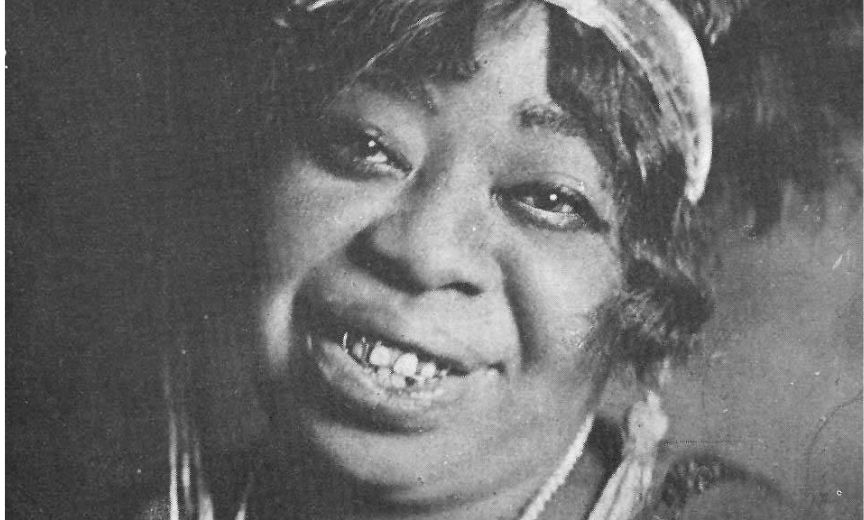
Ma Rainey.

Ma Rainey was born in the 1880’s and came to fame as a blues singer shortly after there came a demand for recording black women. Her recordings spread like wildfire and she soon was touring the country and released a set of recordings with Louis Armstrong.

Though most of her songs detailed romantic relationships with men, Ma Rainey was openly attracted to women. One night, her neighbors filed a noise complaint that led the cops to her door while she was having an orgy with a few of her background singers and fans. If your orgy gets a noise complaint, you did it right.

Ma Rainey was the only one who couldn’t evade the cops in time. The ensuing dispute led her to write “Prove it on me Blues,” which included the lyrics: “Went out last night with a couple my friends / It must’ve been women cause I don’t like no mens. / Wear my clothes just like a fan / talk to the girls just like any old man. / They say I do it, ain’t nobody caught me / Y’all got to prove it on me.”

#QueerHeroes Day 6 – Edward Sagarin (Alias: Donald Webster Cory)

#QueerHeroes Day 6.
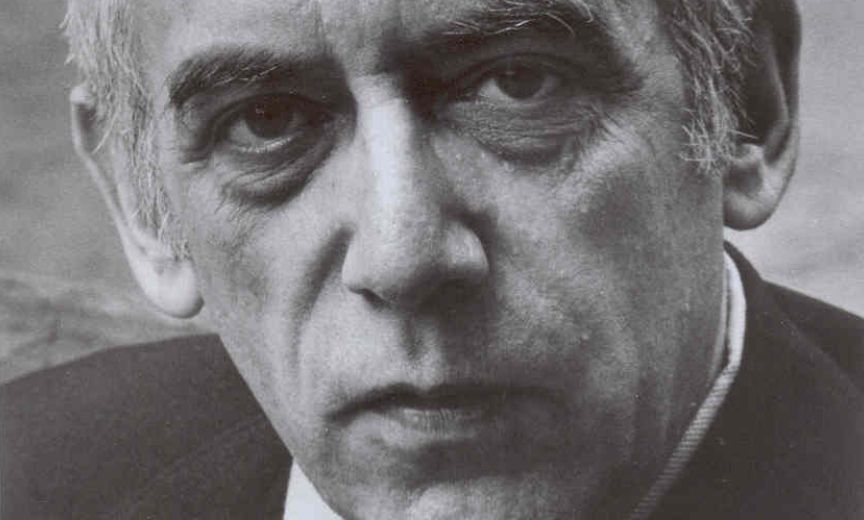
Edward Sagarin (Alias: Donald Webster Cory).

I was conflicted about including him, but his contributions are undeniable and his story is an interesting one.

Sagarin was born in 1913. He married his wife in the 30’s and worked in the perfume and cosmetics industry.

But he led a double life. Under the pseudonym Donald Webster Cory, Sagarin published “The Homosexual in America” in 1951 which earned him the reputation as “Father of the Homophile Movement.” It was one of the first publications in the US to not only discuss homosexual political causes and action, but to stand staunchly in support of us. He said, “The only homosexual problem that exists is the one created by heterosexual society.” The book sold thousands of copies, though hardly anyone read it in public.

If the Kinsey report showed gays of the era the scope of our numbers, “The Homosexual in America” rallied them. It’s undoubtable that the information and calls to action in the book helped advance the cause, however Sagarin didn’t advance with it.

Sagarin (as Cory) was a member of the Mattachine Society, and a conservative one at that. The group reached a divide and Sagarin was on the wrong side of it. Fellow Mattachine member Frank Kameny said to them in a speech, “The entire homophile movement is going to stand or fall upon the question of whether homosexuality is a sickness, and upon our taking a stand on it.” We know that this is exactly what happened and we began advancing leaps and bounds faster as society began to relinquish the idea that we are mentally ill. However, at the time, Sagarin was against Mattachine taking the position that homosexuality was not an illness or maldevelopment. He threatened to leave the organization if it took that position, to which Kameny replied: “You have become no longer the rigorous Father of the Homophile Movement, to be revered, respected, and listened to, but the senile Grandfather of the Homophile Movement, to be humored and tolerated at best, to be ignored and disregarded usually; and to be ridiculed, at worst.”

Sagarin remained closeted all his life.
#QueerHeroes Day 5 – Audre Lorde

#QueerHeroes Day 5
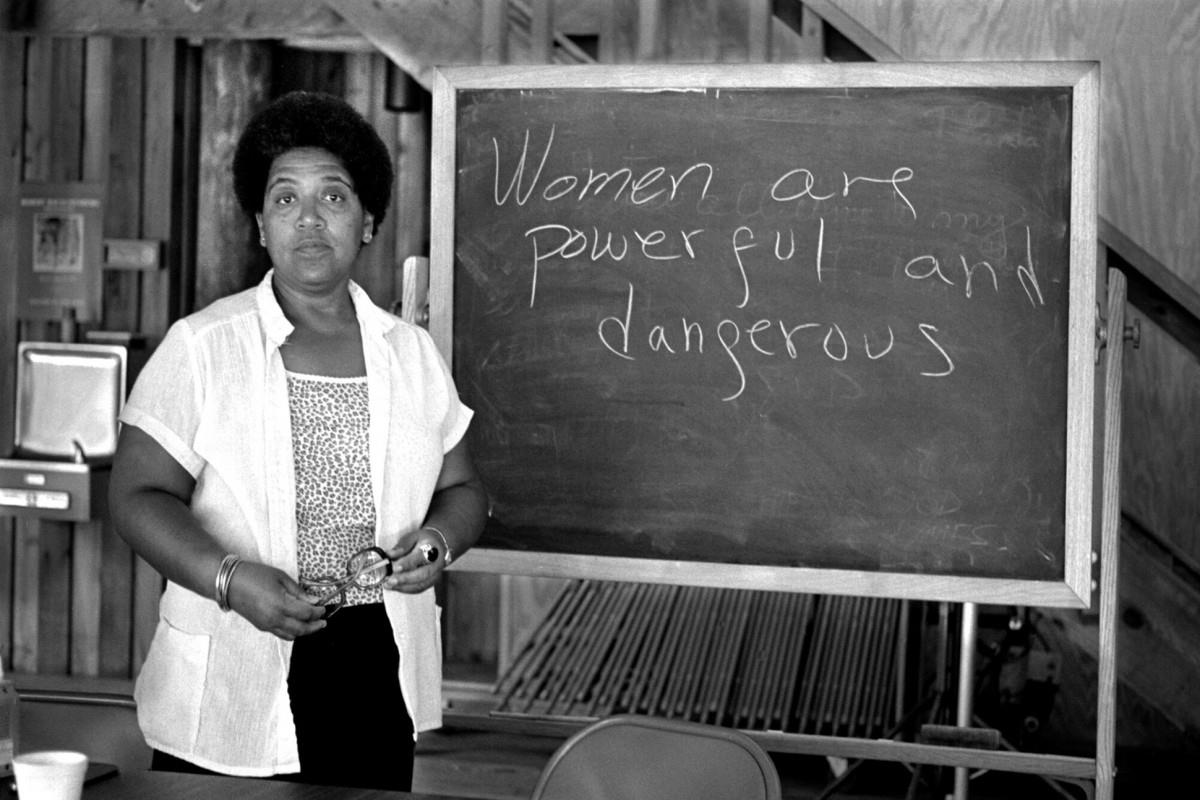
Audre Lorde

“My sexuality is part and parcel of who I am, and my poetry comes from the intersection of me and my worlds. . . . Jesse Helms’s objection to my work is not about obscenity . . .or even about sex. It is about revolution and change. . . . Helms knows that my writing is aimed at his destruction, and the destruction of every single thing he stands for.”

Audre Lorde described herself as “black, lesbian, mother, warrior, poet.” She was not only a champion of queer rights, but of civil rights across a vast array of groups. Her work and ideas helped bring the concept of intersectionality to public consciousness. She was famous around Greenwich Village (Frequenting the Waldorf Cafe with James Baldwin) and also had a residency at Tougaloo College in Mississippi (where Alice Walker had a residency around the same time).

A warrior she was. Lorde used poetry and prose as a weapon to change minds and challenge oppressive ideas. Powerful and dangerous, indeed.


#QueerHeroes Day 4 – Edith “Edie” Windsor

#QueerHeroes Day 4.
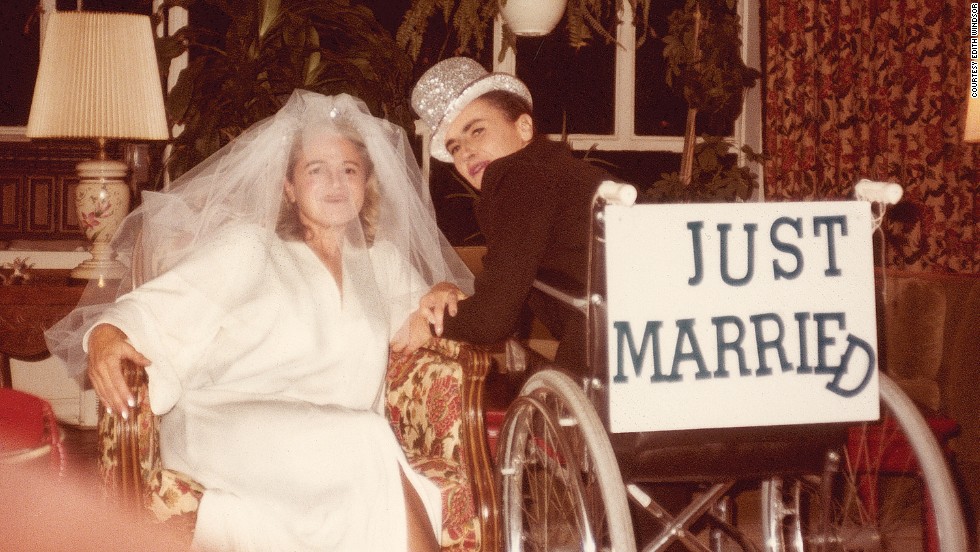
Edith “Edie” Windsor

Edith Windsor was a queer rights activist who fought for us long before United States v. Windsor would solidify her legacy in our community. She met her partner and eventual wife Thea Spyer in 1963. In 1969, they arrived back in New York from a trip to Italy on the second day of the Stonewall Riots. After that, they began attending marches and Windsor would lend her Cadillac to queer rights organizations.

When Thea died, Windsor was demanded to pay over 300k in estate taxes because, under Section III of the Defense of Marriage Act, “marriage” was defined as a union between one man and one woman. The US didn’t recognize their marriage as legitimate and therefore Windsor couldn’t benefit from the estate tax exemption that surviving spouses in straight marriages enjoyed. Windsor took our country’s ass all the way up to the Supreme Court, where they found that “The federal statute is invalid, for no legitimate purpose overcomes the purpose and effect to disparage and to injure those whom the State, by its marriage laws, sought to protect in personhood and dignity.” (Interestingly enough, this decision was written by Justice Anthony Kennedy who also authored the decision in the bakery case today).

I met Edith Windsor by chance in a theatre lobby one night. Needless to say, she wasn’t surprised when a teary-eyed gay came up and asked to hug her. I first saw her from a distance at my first Pride Parade (and the very first after the DOMA ruling). She was grand marshal and waved joyously to the crowd from a Cadillac Convertible—presumably the same treasured one she’d lent to queer organizations after Stonewall. Edie died in September 2017.

Keep in mind, y’all. We’ve been swaying the courts for generations. We may have moments of defeat, but we are collectively, ultimately irrepressible.

#QueerHeroes Day 3 – Jennie June

#QueerHeroes Day three.
Jennie June.

Jennie was one of the first transgender people to publish her autobiography. She was trans before the word existed, often referring to herself as a “Fairie” or an “Androgyne.” She was a sex worker at Paresis Hall (Now the headquarters of the Village Voice) in the 1890’s. The real name of Paresis Hall was “Columbia Hall,” but the public gave it the name “Paresis” (the medical term for insanity), because they perceived its patrons to be mentally ill. With her sisters, Jennie founded the “Cercle Hermaphroditos” “to unite for defense against the world’s bitter persecution of bisexuals [which meant ‘of two sexes’ at the time].”

Jennie would write two books– “Autobiography of an Androgyne” and “The Female-Impersonators” –under the pseudonym Ralph Werther. The autobiographies, due to their content, were at first only published in medical journals. I came upon them when researching for my book last year and Jennie June ended up inspiring the entire first chapter.

Trans women at the time usually lived under multiple aliases: Their given names, fake male names that they used in the “underground” when not presenting as women, and their chosen names. One woman remembers signing seven different names in one day and having to keep up with whom she was supposed to be at any given time. They could only present as their true gender under the safety of “degenerate” bars.