#QueerHeroes Day 5 – Patrick Kelly

#QueerHeroes Day 5.
Patrick Kelly.

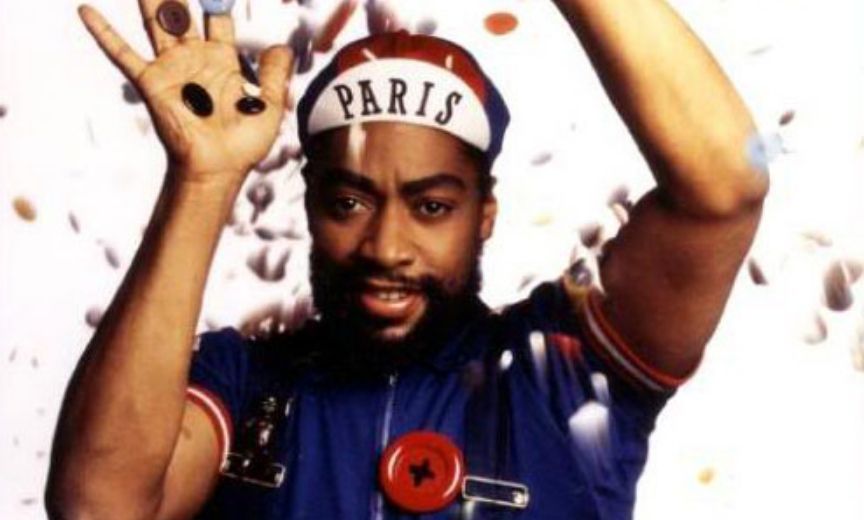
Patrick Kelly was born in Vicksburg, Mississippi in 1954. His mother was a home economics teacher and he learned to sew in his teenage years.

After graduating high school, he moved from Mississippi to Atlanta, where he worked in a thrift shop. He began modifying the donated designer fashions and constructing pieces of his own, which he sold outside his store within a beauty salon.

He became a favorite designer of Black supermodel Pat Cleveland. She encouraged him to move to Paris, which he eventually did.

It wasn’t long before Kelly became one of the city’s premiere fashion designers, becoming the first American EVER admitted to Fédération française de la couture, du prêt-à-porter des couturiers et des créateurs de mode—the governing fashion body for all of Paris fashion.

Image may contain: 8 people, people standing

Every celebrity from Bette Davis to Grace Jones to Madonna to Cicely Tyson became clients of his. He held runway shows at the Louvre.

Kelly was just about to reach his peak, developing lingerie, perfume, and menswear lines before he was diagnosed with AIDS.

He died in 1990 at only 35 years old. He’s buried in his beloved Paris today.

#QueerHeroes Day 3 – Josephine Baker

#QueerHeroes Day 3 – Josephine Baker

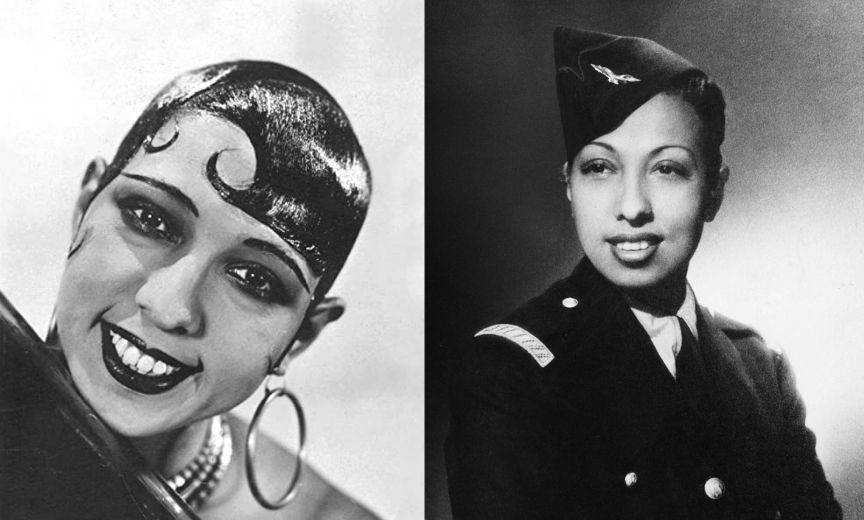
Josephine Baker was born 114 years ago today. She died at 68 years old, but had dozens of lifetimes’ worth of experiences.

After becoming a breakout Vaudeville star in her teenage years, Baker appeared in Shuffle Along—a hugely successful 1921 Broadway musical starring and written by Black Americans. Baker became a figurehead of the Harlem Renaissance and one of the highest paid chorus members on Broadway. She also had a relationship with the Blues singer Clara Smith—who was dubbed “the queen of the moaners” for her voice.

Exhausted with America, Josephine moved to Paris where her star skyrocketed. She had successful European tours and danced in the Folies Bergère. On tours, her performances were so controversial that at one point a church across the street blared its bells in hopes of distracting from it.

It was during her early years in Paris that she mastered her singing talent, and her voice soon became as hypnotic as her dancing.

Ernest Hemingway called her “the most sensational woman anyone ever saw.” She bought Marie Antoinette’s actual bed. She owned a cheetah which she adorned with a diamond collar.

Then World War II hit, but Baker refused to leave Paris. Instead she became a spy for the French resistance. YEAH.

She used her famous charm to collect information from German, Japanese, and Italian officials during parties at various embassies, never raising suspicion.

When the Germans ultimately invaded Paris, she left the city but continued to house and obtain visas for members of the French resistance in her new residence.

Y’all, she still wasn’t even done.

In the 1950s, she focused her efforts on the Civil Rights Movement. Though still based in France, she began touring the American south. She refused to appear in front of segregated audiences.

Her work continued with the NAACP, and she would be the only official woman speaker at the March on Washington, where she said:

“I have walked into the palaces of kings and queens and into the houses of presidents. And much more. But I could not walk into a hotel in America and get a cup of coffee, and that made me mad. And when I get mad, you know that I open my big mouth.”

Josephine Baker died in 1975, and the world is an infinitely better place because she opened her “big mouth.”

This bio doesn’t do her storied life justice, so you should absolutely research it deeper to learn how not to waste a second of life and what it means to work towards justice even when it comes with risking your life and career.


#QueerHeroes Day 2 – Zazu Nova

#QueerHeroes Day 2 – Zazu Nova.

Zazu was one of the many trans patrons of the Stonewall Inn. She made her living as a sex worker and frequently referred to herself as the Queen of Sex, always carrying herself like actual royalty. She was a Unitarian and vocally proud of her religious upbringing.

Zazu was there the night of the Stonewall riots and seen fighting alongside Marsha P. Johnson. Some who were there insist that Zazu began fighting the cops in reaction to the violent arrest of Stormé Delarverie. According to these accounts, it was Zazu’s punch that started the Stonewall riots.

After the riots, she joined the Gay Liberation Front and the Street Transvestite Action Revolutionaries. She was also a founding member of New York Gay Youth.

Sadly, little is known about what became of her after her work with these organizations.

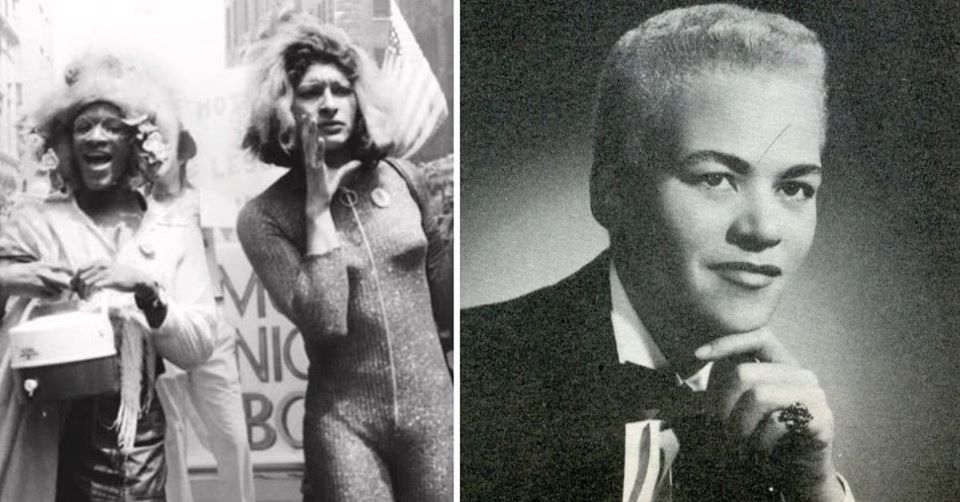
#QueerHeroes Day 1 – Marsha P. Johnson, Sylvia Rivera, and Stormé Delarverie

#QueerHeroes Day 1 – Marsha P. Johnson, Sylvia Rivera, and Stormé Delarverie

I can’t stress enough that anyone telling you they know definitively how the Stonewall Riots began should be met with skepticism. Everyone present those nights saw the same picture from a different angle. I’ve talked with people who were there only for them to directly contradict each other. So much of it is legend or lost to history, the effect is what matters. These three are some of the people who began the revolution that resulted from the riots.

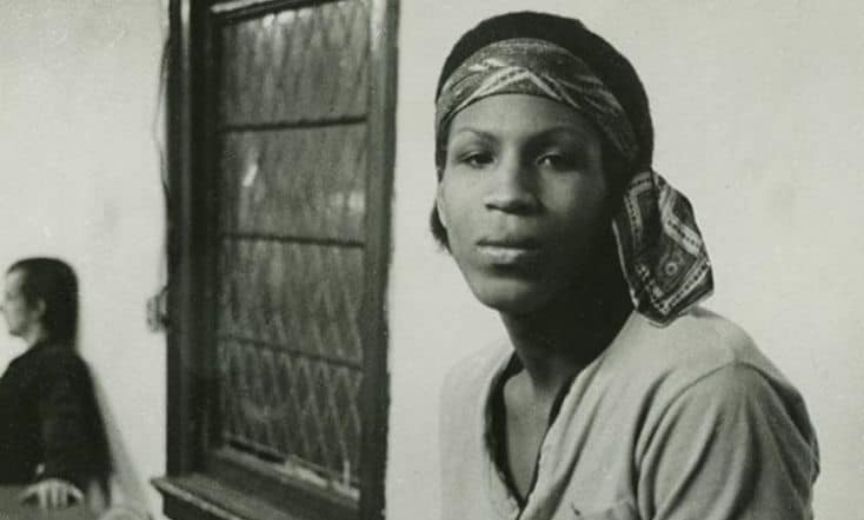
Marsha P. Johnson insisted that she didn’t begin the Stonewall Riots, as is widely believed. She joined the riots later in the first night, after they had begun. She was seen crawling up a lamppost where she then dropped a cement block onto a cop car.

With Sylvia Rivera, Johnson formed the Street Transvestite Action Revolutionaries, which focused on getting resources to homeless queer youth in the early 70s. The two worked together toward trans liberation and mobilization for the rest of their lives. They were met with backlash from many cis gay people in the movement, who said their ostentatious nature made them look bad. Toward the end of her life, Rivera was frustrated at the movement’s emphasis on marriage and military service, feeling they’d strayed from their radical roots.

Stormé Delarverie was a butch lesbian who, in her youth, rode horses in the Ringling Brothers Circus and toured the country as a drag king with the Black performance troupe, the Jewel Box Revue.

On the first night of the riots, a woman matching Stormé’s description was being led roughly through the crowd by police. She began punching the cops and encouraging others to fight back.

She would later say:

“It was a rebellion, it was an uprising, it was a civil rights disobedience – it wasn’t no damn riot.”

Into her 80s, she would patrol the lesbian bars of Christopher street with a pistol, ready to fuck up anyone who messed with her “baby girls.”

I want to emphasize what actually happened at Stonewall: bar patrons began throwing change, rocks, and bottles at police until the police were forced back inside the evacuated bar.

Protestors began breaking the windows of the bar and attempting to set it on fire.

The cops who raided the bar contacted the tactical police force, who came in full riot gear to disperse the crowd.

Instead of cowering, trans girls and femmes and drag queens formed a kick line and began approaching the riot squad, mocking them with chants.

Stonewall was absolutely anti-police. It was violent. It was destructive. And it was liberating.

The riots marked a turning point from so-called respectable protests, in which organizers imposed traditional dress codes and forbade shows of same-sex affection, like holding hands. Groups like the Gay Liberation Front emerged with unapologetic demonstrations and unmistakable anger.