Originally published to Chosen Magazine on June 23, 2018.
By Evan Brechtel
June in New York City. Sweat trickles down backs and necks a little faster. Most of the flowers have bloomed—even the ones between cracks on the sidewalk. Rainbows ride on a merciful breeze.
There’s a percussive energy surrounding Pride month. It thrums far beyond New York, through both coasts and every state and region in between from Alabama to Appalachia. Across oceans from Calgary to Cape Town.
But Pride, like the queer people who celebrate it, rightfully defies simple definitions. There are more ideas of what Pride is and what it should be than there are typos in a presidential tweet.
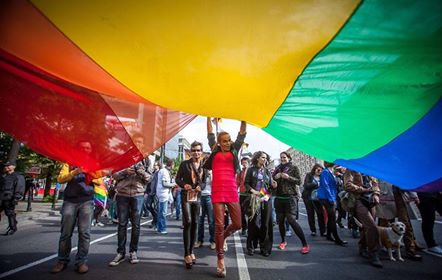
To many, Pride is a party; a celebration earned through generations of anger and centuries of fear. Strangers kiss each other in the street because they can. Queer anthems blare from every block. A zoetic joy transforms stone cement streets into rivers of vibrance and rhythm. The party aspect has played a part in Pride since its inception. In a 1970 issue of Get Out! Magazine, the Gay Liberation Front covered a commemoration of the first anniversary of the Stonewall Riots. A parade called Christopher Street Liberation Day:
“These days mean something special for every lesbian and homosexual. They mark the first time that gays took to the streets angry, proud, joyous—tearing down the prisons in which this sexist society has chained us. They are days to march, to chant, to dance, to love, to rap, to study—with brothers and sisters coming together to openly affirm the beauty of our lives and throw wide open the closet doors which will no longer be nailed shut.”
One difference between the celebrations of the 70’s and our current times is meant to catch your eye: Logos. Each June, graphic designers everywhere churn out rainbow remixes of ubiquitous insignias. Corporations sell special Pride edition lines of shoes, headphones, wrist watches, sunglasses, and virtually anything big enough to fit a logo. Pride parades in cities like London and New York have come to rely on corporate sponsorship for the festivities to continue on their current scale. Corporate sponsors in New York alone contribute around $30,000, with larger companies spending millions for sponsorship in multiple Pride events around the world. Some of these companies use their floats as an opportunity to give their queer employees a space to own their queerness. Some use the floats to elevate non-profit organizations that benefit queer people. Others consider the sponsorship the same way they’d consider paying for a billboard.
Though I may sound a tad resentful, I swear I don’t deem this all bad. In a country where it’s still legal to fire someone for their sexual preference or gender identity in twenty-nine states, I’m all for recognizable brands and businesses standing with us. But that’s what they actually have to do: Stand with us. Not with sentiments, but with actions and contributions deeper than a symbol and longer than the month of June.
It’s a common marketing tool to paste a logo over a rainbow, buttoned with a platitude about equality (a practice known as “pinkwashing”). Unfortunately, genuine corporate allyship is much rarer. The hollow support isn’t just limited to corporations, but expands to politicians and public institutions. In 1998, a New York based activist group called Take Back The March handcuffed themselves together to block then-Mayor Rudy Giuliani from marching in the parade, citing his poor stance on queer issues, especially his inaction on the uptick of violence in queer communities. All twenty of the activists were arrested. Considering those Giuliani fights for these days, it’s easy to see who really belonged in the ‘98 parade.
A similar act of civil disobedience occurred last year, this time in D.C. by the group No Justice No Pride, who blocked the parade procession at three different points, protesting the participation of defense company Lockheed Martin, Dakota Pipeline sponsor Wells Fargo, and police officers featured in the march. A small consolation: D.C. authorities made the smart decision not to arrest activists for the very acts of protest that make Pride worth celebrating. War profiteering and displacement have no place at our parade. And until police forces marching at Pride parades confront systemic police brutality with actions like implicit bias training and judicial accountability, their recognition in an event born from resistance to police violence is questionable at best. And though police presence is necessary for such widely attended and targeted events, only a few groups in the queer community get to feel safer with their presence for these same reasons.
Pride and Protest are inseparable. Unabashed queer joy is still a radical act, especially when swathes of people relish it together as we do this time of year. That’s why the term “Pride” is so apt and so immensely necessary: We will no longer be made to collectively accept the closet. We will parade through the streets and make them see us in all our infinite facets: our love, our kinks, our drag, our jocks, our genderfuckery, our flamboyance, and our overall right to be complex human beings deserving of respect. However, metropolises like New York, London, and Los Angeles enjoy a level of public acceptance that we all too often forget remains rare. Other parts of America and the world don’t have the same benefit.
Earlier this year, Bailey McDaniel sought a permit to hold the first Pride parade for the town of Starkville, Mississippi. Despite the motion being supported by most Starkvillians in the room, the Board of Aldermen voted it down. The decision received national attention and the community of Starkville banded together to oppose it, placing rainbow flags in their storefronts and outside their homes. Soon, the Board of Aldermen voted on the issue again and one of the men had a change of heart after witnessing the outrage. The permit was granted and, that March, Starkville had its first Pride. McDaniel had hoped for 150 people to show up. 2,500 did. Protest breeds Pride and Pride breeds protest.
Needless to say, social and systemic animus toward Pride isn’t confined to the States. Five years after Moscow mayor Yury Luzhkov called Pride parades “Satanic” in 2006, the Russian police detained several queer activists for staging an unauthorized queer pride rally. In 2013, a Haitian queer rights organization was forced to cancel its Afro-Caribbean LGBTQ Festival due to vilification by the country’s politicians and threats of violence from its citizens. In Ukraine and Argentina, activists have had to convince the government to provide protection for those marchings. And these are only the Pride-related instances, not accounting the routine human rights abuses and State sanctioned violence against queer people in these and other countries. No matter celebratory or how distant our march, we still march for them.
So is Pride a party or a promotional event or is it still a protest? The answer is yes.
Queer people fought hard to get here, in both our personal navigation of our own identities and collective efforts as a movement. We’ve earned the right to party, to celebrate. When the result of our efforts is world-changing enough that businesses and institutions and public figures leap to endorse us, we must be held accountable with whose endorsements we accept. Who do we want marching with us? And, despite our valiant efforts, there’s so much work to do. Where there exists systemic marginalization of any kind, there exists queer marginalization, for we exist in every group. Pride will and must always be a protest. Anything less would be an insult to the outrage that conceived it. The first advertisement for the first Pride knew this in 1970 when it was still Christopher Street Liberation Day:
“What it will all come to, no one can tell. It is our hope that the day will come when homosexuals will be an integral part of society—being treated as human beings. But this will not come overnight. It can only be the result of a long, hard struggle against bigotry, prejudice, persecution, exploitation—even genocide. The homosexual who wants to live a life of self-fulfillment in our current society has all the cards stacked against them. Gay Liberation is for the homosexual who refuses to accept such a condition. Gay liberation is for the homosexual who stands up and fights back.”

 Evan Brechtel